
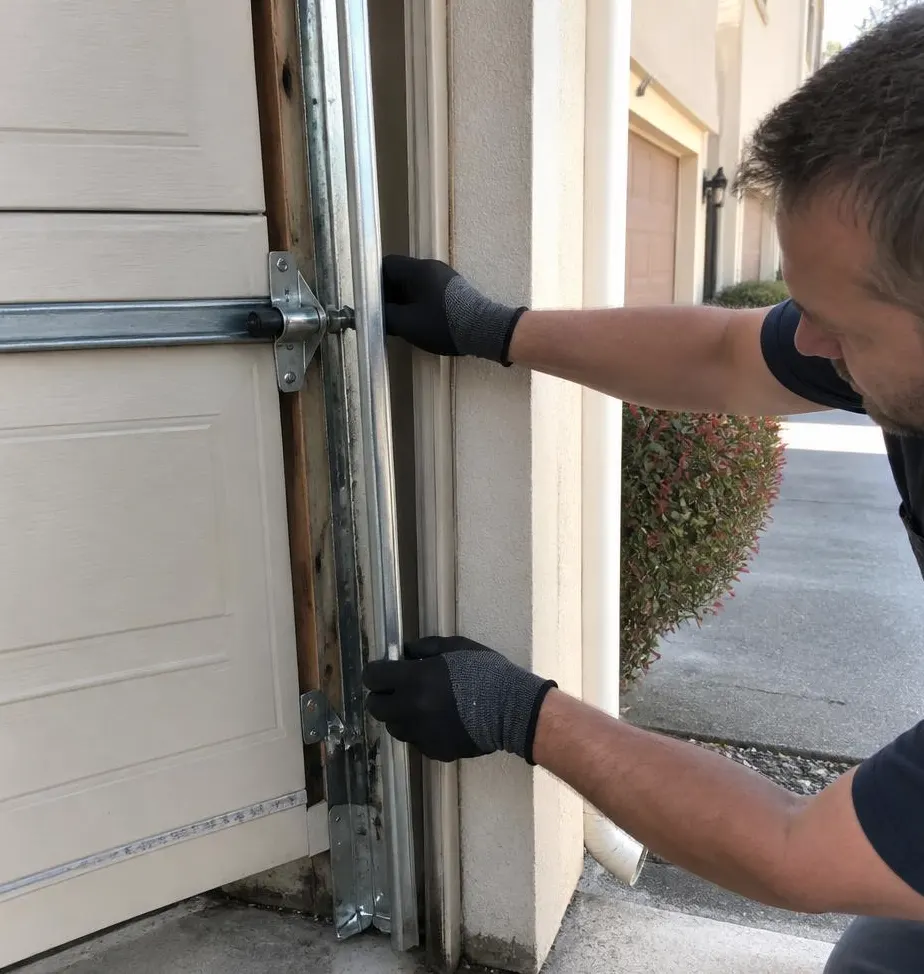
The Short Answer
A garage door spring under tension is storing enough force to lift a door that weighs anywhere from 100 to over 400 pounds. When that spring fails, or when someone tries to wind or unwind it without the right tools, the stored energy releases all at once. That release can snap bones, tear skin open, cause serious eye injuries, and in the worst cases has been fatal. This is not a job where "being careful" is enough protection — the danger is built into the physics, not the person's skill level.
What Actually Goes Wrong
Most garage doors use either torsion springs (mounted on a bar above the door) or extension springs (stretched along the horizontal tracks). Both hold the door's full weight in reserve. Here's what tends to happen when things go badly:
- The spring snaps under tension. A torsion spring can unwind with enough force to spin a steel winding bar out of someone's hands like a propeller, striking the face, hands, or chest.
- The door drops unexpectedly. If a spring fails while the door is open, or while someone has disconnected the opener to "just lift it manually," the door can fall fast and hard onto hands, fingers, or anyone standing underneath it.
- Cables whip loose. Extension springs are usually paired with safety cables, but on older installations without them, a broken spring can send the cable snapping through the air.
- Brackets give way. A spring under the wrong tension can pull its mounting hardware loose, sending metal fragments flying.
The injuries that result — crushed fingers, broken ribs, facial lacerations, concussions — are the reason emergency rooms see garage door spring incidents as a recurring, predictable category of home repair injury.
Why This Time of Year Raises the Stakes
Garage door springs don't fail evenly throughout the year. They tend to go at the end of a hard-use stretch, and the shift from humid summer into cold, dry winter is exactly that kind of stretch. In this part of Indiana, springs spend all summer flexing through heat and humidity, then get hit with the first real cold snap of the season. Cold metal is more brittle and less forgiving. A spring that was already fatigued from a few thousand open-and-close cycles is more likely to finally give out once temperatures drop and the metal contracts.
Add in the ice, snow, and road salt that get tracked into garages all winter, and you've got a recipe for corrosion that weakens coils from the inside out. A spring that looks fine on the outside can be rusted and compromised where you can't see it. This is why so many spring failures in this region show up right as the weather turns — not randomly, but predictably, tied to the seasonal swing homeowners here deal with every year.
Specific Actions That Actually Prevent an Injury
You don't need to become a garage door expert to stay safe. You need to recognize the warning signs and know what not to do.
Warning signs a spring is close to failing
- A loud bang from the garage, often mistaken for something falling off a shelf — this is frequently the sound of a spring snapping.
- The door looks crooked or hangs unevenly when open partway.
- The door feels unusually heavy or jerky when opened manually.
- Visible gaps, rust spots, or stretching in the coils.
- Frayed or loose cables near the bottom brackets.
What to avoid doing yourself
- Don't attempt to wind, unwind, or adjust a torsion spring with screwdrivers, pliers, or anything other than the correct, properly sized winding bars.
- Don't disconnect the opener and try to force the door up or down manually if you suspect a broken spring — without tension support, the door can drop suddenly.
- Don't stand underneath an open door that's being held by a questionable spring, even briefly.
- Keep kids and pets out of the garage entirely if you notice any of the warning signs above, until the spring is replaced.
- Don't assume a spring that "looks okay" is safe — rust and fatigue happen from the inside of the coil, not just the surface.
The safest move, every time, is to stop using the door and call for a replacement rather than troubleshoot the spring yourself. This is one repair where there's no partial-credit version of doing it safely.
When to Call Bristol Garage Door Pro
If you've noticed a loud bang, an uneven door, or visible rust and stretching on your springs, that's the moment to call rather than wait. We handle Spring Replacement with the correct torsion bars, properly matched spring weight for your door, and a full balance test afterward so the door isn't straining the opener motor. If a spring has already failed and the door is stuck, our Emergency Garage Door Service covers exactly that situation — getting your door safely operational again without you needing to go near the spring system at all. Heading into another Indiana winter, it's also worth having springs checked before the real cold sets in, since that's when fatigued coils are most likely to let go.
If your garage door is making noise, hanging crooked, or you just heard a loud bang you can't explain, call Bristol Garage Door Pro today. We serve Bristol, IN and the surrounding Elkhart County communities, and we'll get your spring replaced safely before winter puts any more strain on it.